

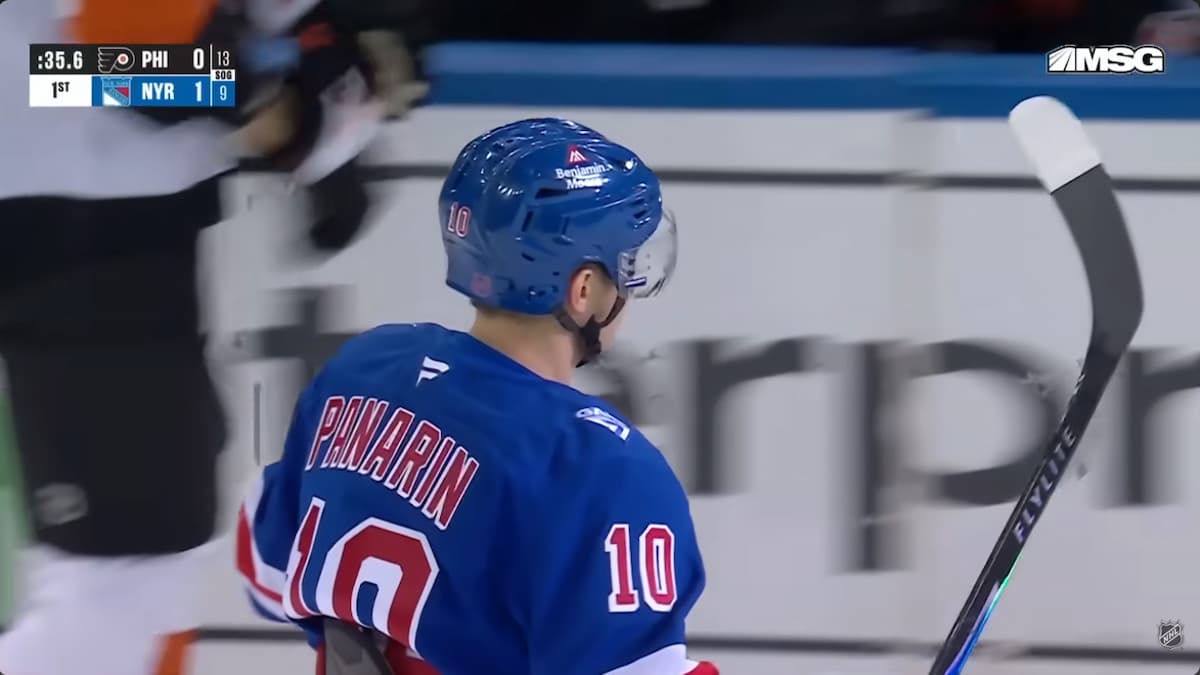
What Panarin Could Have Meant for Michkov’s Development
The Philadelphia Flyers missed a real opportunity in Matvei Michkov’s development by not trading for Artemi Panarin.
Panarin is now in Los Angeles. The Kings acquired him from the Rangers for forward prospect Liam Greentree and a conditional 2026 third-round pick, then signed him to a two-year, $22 million extension. Honestly, I thought the return would be higher. Greentree is a strong prospect — probably top-20 in most rankings — but this wasn’t some franchise-altering haul. Seeing both the trade compensation and the extension only reinforces my original thought: the Flyers absolutely could have been in on this.
Maybe they checked in and Panarin didn’t want Philadelphia. That happens. But from a roster, cap, and development standpoint — especially with Michkov — the fit made too much sense to ignore. I originally thought Panarin would land somewhere in the $12–16 million range annually. He ended up at $11 million. That’s a controllable number on a short-term deal, and exactly the type of contract the Flyers had the flexibility to absorb.
The Flyers haven’t had a true superstar since Eric Lindros in 1992. And right now, whether the organization wants to fully admit it or not, they have a real situation on their hands with Michkov. Danny Brière gave the usual stock media response on Monday saying Rick Tocchet and Michkov are aligned. But when you listen to what Tocchet actually said over the weekend — about Michkov coming into camp out of shape, about being late for treatments — it tells a different story. Tocchet doesn’t throw words around casually. When he says something publicly, it’s calculated. To me, that sounds like a young player still struggling to fully adapt to life in the NHL.
Panarin could have helped bridge that gap.
There’s a long history in this league of franchise players living with veterans early in their careers — Crosby, McDavid, Celebrini — and it’s proven to help elite players settle in faster, both on and off the ice.
Then there’s the case of Evegeni Malkin.
Malkin entered the league as a 20-year-old in 2006 with the Pittsburgh Penguins and moved in with fellow Russian and Penguins defenseman Sergei Gonchar. Gonchar took Malkin under his wing and helped guide him through life as a professional athlete in North America — not just hockey, but everything that comes with it.
And that mentorship clearly mattered.
When Malkin won the Hart Trophy in 2012, he went out of his way to thank Gonchar in his acceptance speech:
“I came here, I not speak English. He’s who take care of me. Sergei Gonchar is great guy, humble player. He’s learned how hard it is to play here (in North America). That’s my best friend here,”
That was Malkin, in his own words, telling the world how important his relationship with Gonchar was to his early development.
The Flyers have historically avoided Russian players — especially elite ones. That leaves them without anyone in the organization who truly understands what Michkov is navigating right now.
You can provide interpreters and development resources, but you can’t replicate lived experience — and that matters.
As of March 2025, Michkov was living in a house with his mother and brother, all three trying to navigate life in a country they had never lived in before. I don’t doubt the Flyers are doing everything they believe they can to make their young prospects comfortable. But there’s a difference between organizational support and lived experience. Someone who understands the language, the culture, the pressure, and the lifestyle can make that transition far smoother.
Panarin is exactly the type of player Michkov could grow into, both stylistically and professionally. This isn’t about sentiment or mentorship clichés — it’s about removing friction. How to train, how to prepare, how to handle the media, how to live as a professional in a demanding sports market. Those things matter.
From a cap standpoint, this move was completely realistic. The Flyers currently project to have over $40 million in cap space next season with only 20 contracts on the books. Yes, Trevor Zegras will need a deal — likely somewhere in the $7–8 million range — and Jamie Drysdale will need a new contract as an RFA, probably in the $4–5 million range on a bridge. Even after that, there would still have been plenty of room to absorb Panarin’s $11 million AAV, or even more if needed to entice him.
The Flyers’ core is already locked in, and their upcoming RFAs are unlikely to demand massive contracts. Michkov could eventually earn a major deal, but only if his play forces the issue. Otherwise, a short-term bridge deal is the more realistic path there as well.
The Flyers are in an awkward middle ground right now — too far along to properly tank, not good enough to seriously contend. The free-agent market is weak, and Panarin could have been another calculated piece of the rebuild. Not a savior, but a guide.
Think back to the Russian Five in Detroit. They didn’t succeed solely because of talent — they thrived because they had players around them who understood their culture, lifestyle, and the challenges they faced. That kind of environment matters more than fans often realize.
If the Flyers are serious about Michkov becoming the face of the franchise, the question isn’t whether Panarin was expensive — it’s whether they fully understood what this stage of his development actually requires.


Leave a Reply